KPI Green Energy Secures First ₹489 Crore Floating Solar Deal; Targets Next-Gen Expansion
Show Table of Contents
KPI Green Energy just landed its first floating solar contract, and traders are trying to figure out if this is a breakout catalyst or just another headline in a volatile renewable energy stock. The ₹489.17 crore EPC deal from Gujarat State Electricity Corporation pushes KPI into next-generation solar technology, but mixed analyst signals and a challenging technical picture make this a tactical trading opportunity rather than a clear buy signal.
Here’s what active traders need to know about KPIGREEN right now.
What Happened
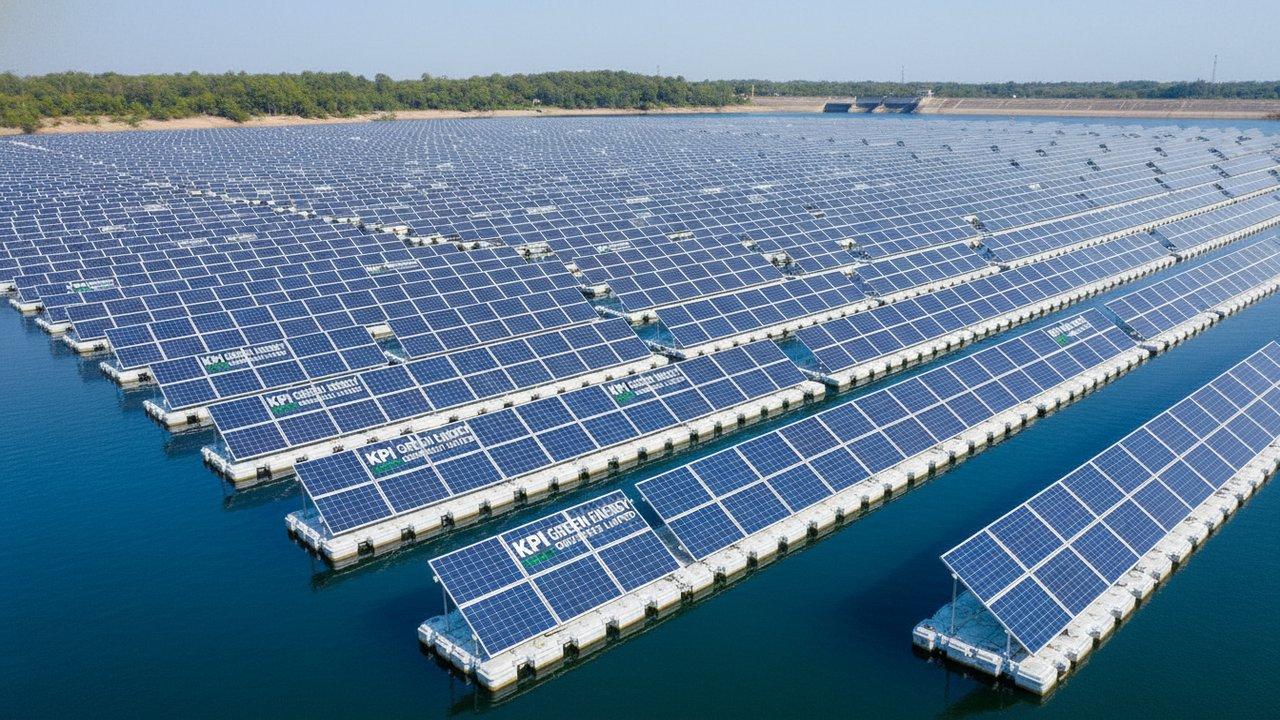
KPI Green Energy received a landmark work order from Gujarat State Electricity Corporation (GSECL) for a 142 MW DC / 110 MW AC floating solar photovoltaic project at the Kadana Dam reservoir in Mahisagar district, Gujarat. The contract, valued at ₹489.17 crore according to Energetica India Magazine, represents the company’s first foray into floating solar installations after focusing primarily on ground-mounted and rooftop projects.
The scope is comprehensive. KPI will handle complete turnkey execution including design, engineering, procurement, construction, installation, grid-connection infrastructure with a 33 kV underground transmission line, and 33/220 kV bays at the Kadana substation. Crucially, the contract includes a 10-year operations and maintenance (O&M) agreement, providing long-term revenue visibility. The project timeline is 18 months.
Dr. Faruk G. Patel, Chairman and Managing Director of KP Group, called this a “major milestone” that expands their portfolio into next-gen floating solar technology and reinforces their full-service EPC credentials across ground-mounted, rooftop, and now floating solar segments.
Stock Performance & Analyst View
KPIGREEN closed at ₹441.75 on December 4, 2025, after a volatile session that saw the stock rally 3.86% on December 3 following the announcement before pulling back 1.06% the next day. The immediate market reaction was positive but measured, suggesting traders are taking a wait-and-see approach on execution.
Analyst sentiment is decidedly mixed, creating the conflicting signals that active traders can exploit. TipRanks shows a consensus “Hold” rating based on 1 Buy, 3 Holds, and 0 Sells. StockInvest.us has downgraded to a “Sell” candidate with a score of -2.306, citing weakness in the technical picture. TradingView technical analysis flashes “strong sell” on both daily and weekly timeframes. However, Stockopedia maintains a “Buy” rating, offering a contrarian signal.
The upside potential is substantial if you believe the fundamental analysts. Stockopedia’s consensus target price of ₹733.00 implies 66% upside from current levels. Dailybulls projects an end-2025 target of ₹719.09, representing 63% upside. The divergence between fundamental targets and technical weakness creates a classic trading range setup.
What This Means for Traders
Stock momentum context: KPIGREEN is trading 25% below its 52-week high of ₹588.80 (hit on January 3, 2025) and 41% above its 52-week low of ₹313.40. The stock is down 40.7% from its all-time high of ₹745.33 from August 2024, placing it firmly in recovery mode rather than momentum territory. Recent daily action shows a whipsaw pattern: +3.86% on Dec 3, -1.06% on Dec 4, preceded by a series of smaller moves between ₹424-₹446.
Entry/exit considerations: For aggressive traders, the ₹425-430 zone offers a defined risk entry, using the recent low of ₹411.60 (December 2) as a stop-loss level. Conservative traders should wait for a sustained break above ₹450-460 resistance, which has capped multiple rally attempts in recent weeks. The 20-day average volume of 954,650 shares provides decent liquidity for position sizing.
Sentiment shift: The floating solar order represents a strategic diversification that could rerate the stock if execution proves successful. However, the immediate sentiment remains cautious. The mixed analyst ratings reflect uncertainty about whether KPI can deliver on this new technology while managing its existing 3 GW order book and 1 GW installed capacity.
Key price levels: Immediate support sits at the recent consolidation zone of ₹424-430, with stronger support at the ₹411-415 level that held during the December 2 pullback. Resistance is layered at ₹450-460 (recent highs), then ₹503 (November peak), and ₹535 (October high). A break above ₹460 on strong volume would signal institutional buying interest.
Next catalysts: Three events matter most. First, Q3 FY2025-26 earnings on January 19, 2026, where traders will look for continued revenue growth and margin stability. Second, progress updates on the Kadana Dam project execution, with any delays likely to pressure the stock. Third, part commissioning of the 250 MW solar and 370 MW hybrid projects, expected in coming quarters according to the company’s Q2 earnings call.
Risk factors: Execution risk on the first floating solar project is paramount. Any delays or cost overruns could trigger a sharp selloff. Financial leverage remains a concern with debt-to-equity at 1.63 and approximately 45.5% of promoter shares pledged, creating potential overhang. Quality of earnings is questionable with a high accrual ratio of 0.59 and negative free cash flow of ₹14 billion despite reported profits. The renewable energy sector faces regulatory and policy risks that could impact project economics.
The Bigger Picture
The floating solar market in India is accelerating rapidly, growing 340 times over nine years to reach 1,700 MW in 2022, with projections for 16.89% CAGR through 2026. Gujarat contributes 14% of India’s solar capacity and is planning a 1.5 GW floating solar plant in Tapi District. Land scarcity is driving CPSUs and private players toward floating solutions, creating a multi-year growth runway.
KPI Green Energy ranks among India’s top 20 solar EPC providers, competing with giants like Larsen & Toubro, Tata Projects, and Adani Green Energy. The company’s centralized Network Operations Center provides a monitoring advantage, but it lacks the balance sheet scale of its larger competitors. Success on the Kadana project could open doors to larger floating solar tenders from NTPC and other central utilities.
Trading Takeaway
This is a high-conviction, high-risk setup best suited for aggressive traders comfortable with renewable energy volatility. The ₹489 crore order adds 4% to the company’s existing ₹8,000 crore order book MoU with Gujarat government, providing incremental revenue visibility but not a game-changer. The real value lies in proving floating solar execution capability.
If you’re already holding, maintain positions with a stop at ₹410. If you’re looking to enter, scale in on weakness toward ₹425-430 rather than chasing rallies. The 66% upside to analyst targets is attractive, but only if you have a 12-18 month horizon and can stomach 15-20% drawdowns. For most active traders, the better play is waiting for Q3 earnings execution proof before committing significant capital.
52 Week Range
Low: ₹313.40
High: ₹588.80
on Jan 29, 2025
on Jan 3, 2025
52 Week Low to All time High Range
Low: ₹313.40
All-time High: ₹745.33
on Jan 29, 2025
on Aug 12, 2024
Recent Returns
1 Week
+0.78%
1 Month
-17.13%
3 Months
-10.05%
6 Months
-7.37%
YTD
-19.21%
1 Year
-18.27%
News based Sentiment:
POSITIVE
KPI Green Energy: Strong Growth & Major Contract Win
KPI Green Energy experienced a significant month with a major EPC contract win, strong financial results, and a positive market reaction. These developments collectively strengthen the investment case and indicate a positive trajectory for the company’s future growth and profitability.
KPI Green Energy – Peer Performance Comparison
Disclaimer: This blog has been written exclusively for educational purposes and does not constitute investment advice or personal recommendations. The author is not SEBI-registered as an investment advisor. Recipients should conduct their own research and consult a qualified, SEBI-registered investment advisor before making any investment decisions. Investments in the securities market are subject to market risks; read all related documents carefully before investing.