wiki
Viktor Orbán Age, Wife, Children, Family, Biography » StarsUnfolded
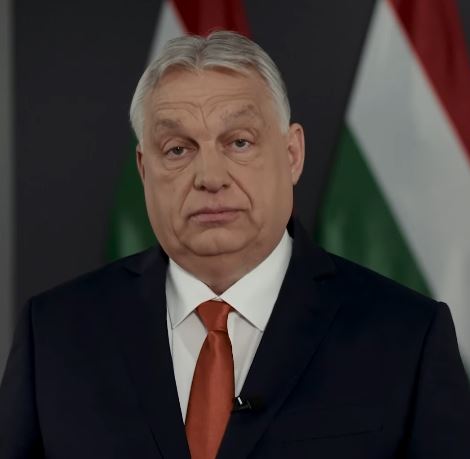
Quick Info→
Wife: Anikó Lévai
Hometown: Felcsút, Hungary
Age: 53 Years
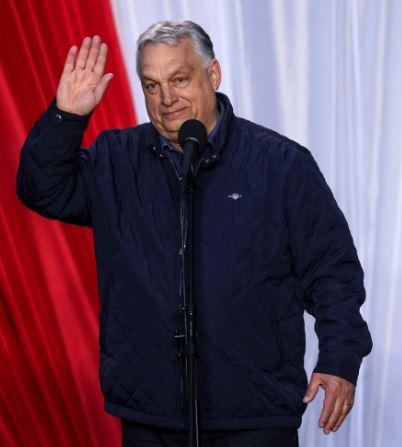
Some Lesser Known Facts About Viktor Orbán
- Viktor Orbán is known to be a longest serving Prime Minister of Hungary.
- He was born in Székesfehérvár, Hungary. For some year in his childhood, he grew up in Alcsútdoboz in Fejér County. In 1973, his family moved to Felcsút.
- In 1977, Viktor’s family moved to Székesfehérvár, where he enrolled at the the prestigious Blanka Teleki school.
- In his first two years there, Viktor served as local secretary of the Hungarian Young Communist League (KISZ). The membership of KISZ was mandatory for matriculation to a university.
- In 1981, after completing high school, Orbán completed his military training. During his military service, Orbán was jailed several times for indiscipline, including failure to appear for duty during the 1982 FIFA World Cup and attacking a non-commissioned officer during a personal argument.
- In 1981, he served during the 1981 declaration of martial law in Poland. In an interview, Orbán revealed that his military service changed his views away from being a supporter of the Communist Regime in Polland.
- Even after criticising the Communist regime in Poland, a state security report in May 1982, listed him as most loyal to the socialist system.
- In 1983, Viktor moved to Budapest to study law at the Jogász Társadalomtudományi Szakkollégium (Lawyers’ Special College of Social Sciences) of Eötvös Loránd University.
- In 1984, he became the became chairman of the executive committee of the college.
- In 1986, Orbán submitted his master’s thesis on the Polish Solidarity movement, based on interviews with movement’s leaders.
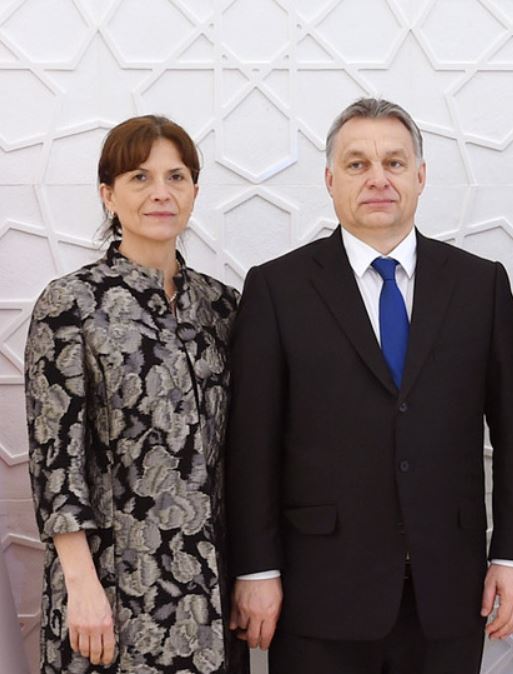
- In September 1986, he got married to Anikó Lévai in Szolnok.

Viktor Orbán with his wife
- In 1987, after completing his Juris Doctor, Orbán started a job as a sociologist at the Management Training Institute of the Ministry of Agriculture and Food.
- In November 1987, Lawyers’ Special College of Social Sciences appointed Orbán to handle a group of 150 delegates from 17 countries to a two-day seminar organised by the European Network for East–West Dialogue, on the Perestroika, conscientious objection, and the prospects for a pan-European democratic movement.
- On 16 June 1989, on the occasion of the reburial of Imre Nagy and other national martyrs of the 1956 Hungarian Revolution, Orbán gave a speech in Heroes’ Square, Budapest, in which he demanded free elections and the withdrawal of Soviet troops, His speech brought him national recognition. In the speech he also announced the foundation of his political party, Fidesz.
- In September 1989, he took up a research fellowship at Pembroke College, Oxford, funded by the Soros Foundation, where he worked on the concept of civil society in European political thought.
- In October 1989, Fidesz was established as a political party. He ran ran unsuccessfully in the Fidesz leadership elections in Budapest.
- In January 1990, he left his project at Oxford and moved back to Hungary with his family to run for a seat in Hungary’s first post-communist parliament.
- In the April 1990 election, he was elected as Member of Parliament from Pest County.
- From 1991 to 1993, he served as the leader of Fidesz’s parliamentary group.
- In September 1992, Viktor was elected as the vice-chairman of the Liberal International.
- In April 1993, Orbán was appointed as the first president of Fidesz. Under his leadership, the party gradually transformed from a radical liberal student organization to a center-right people’s party.
- In the 1994 parliamentary election, Orbán became MP from Fejér County.
- Between 1994 and 1998, he served as the chairman of the Committee on European Integration Affairs.
- In 1995, for a short period of time, he served as a member of the Immunity, Incompatibility and Credentials Committee, Fejér County
- In 1995, under his presidency, Fidesz adopted Hungarian Civic Party. Gradually, his party became dominant on the right wing of the political spectrum of Hungary.
- In April 1996, Orbán was appointed as the chairman of the Hungarian National Committee of the New Atlantic Initiative (NAI).

Viktor Orbán, while sitting in the parliament as a leader of opposition
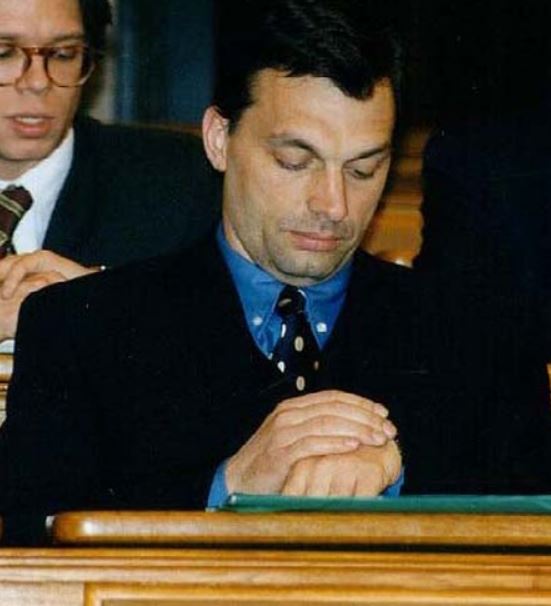
- In 1998, for the parliamentary election, he formed an alliance, Liberal International, with the Hungarian Democratic Forum (MDF) and the Independent Smallholders’ Party (FKGP), and won the election. He became the second youngest prime minister of Hungary.
- In November 2000, Fidesz left the Liberal International and joined the European People’s Party (EPP). During this time, Orbán worked hard to unite the center-right liberal conservative parties in Hungary.
- In October 2002, at the EPP’s Congress in Estoril, he was appointed as the vice-president. He served there till 2012.
- In the 2006 parliamentary election, Orbán was the Fidesz candidate. However, he ran unsuccessful, that also put his political career in question mark.
- In May 2007, he strengthened his position in his party and re-elected as the president of Fidesz for yet another term.
- In the 2009 parliamentary election, Viktor’s party, Fidesz won by a large margin, where it received 56.36% of votes and 14 of Hungary’s 22 seats. On 29 May 2010, he was appointed as the Prime Minister of Hungary for his second term.
- Under his second premiership, on 1 January 2012, he took one of the major steps, where replaced the Hungarian Constitution of 1949 with new constitution.
- For the 2014 parliamentary elections, Viktor’s party made an alliance with Christian Democratic People’s Party (KDNP) and won with a qualified majority in the election. On 6 May 2014, Viktor Orbán sworn in as Prime Minster and formed his third cabinet.
- In the April 2018 Hungarian parliamentary election, the Viktor’s Fidesz–KDNP alliance won, where they secured two-thirds majority. In the new cabinet Orbán remained prime minister of Hungary for his fourth term.
- In the 2018 election, Orbán campaigned primarily on the issues of immigration and foreign meddling in Hungary.
- In April 2022 parliamentary election, Viktor’s party won with a majority and secured 135 of the 199 seats in the National Assembly. However, Orbán’s close ties with Moscow raised concerns over his victory.
- In 2023, Orbán criticized the European Union’s New Pact on Migration and Asylum. He said saying,
Unity is dead, secure borders are no more.”
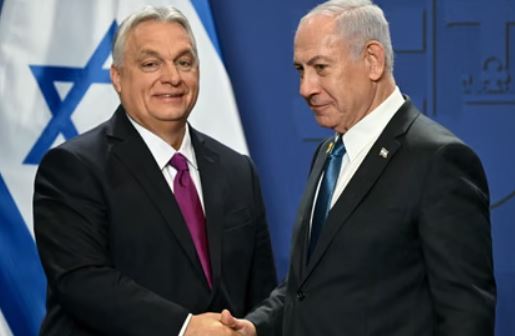
- Orbán shared a close relationship with the Israeli Prime Minister Benjamin Netanyah. He is described as one of Mr Netanyahu’s closest allies in Europe.

Viktor Orbán (left) with Israeli Prime Minister Benjamin Netanyah (right)
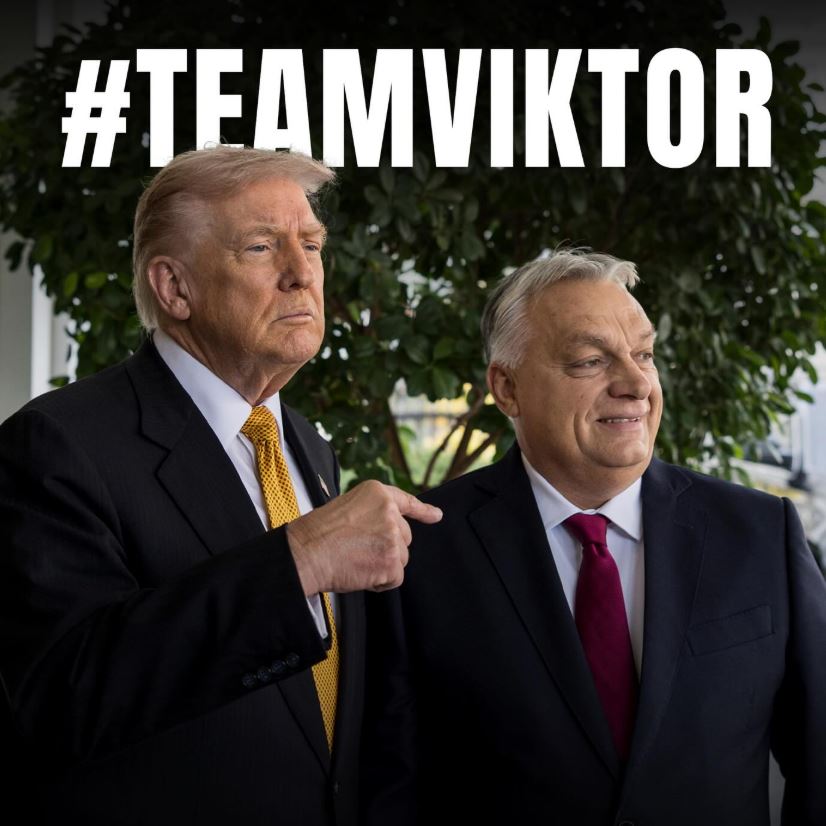
- He also shared a close bond with US President Donald Trump and considered as close ally of Trump. He endorsed Trump in the 2016, 202o and 2024 Presidential Elections.

Viktor Orbán with the President Donald Trump during Viktor 2026 Parliamentary Election’s Camapign
- Since 2010, Orbán has led many initiatives and laws to limit LGBT+ rights in Hungary.
- In April 2026, Viktor Orbán ran for the fifth time for Prime Minister of Hungary. On 12 April 2026, he lost to Péter Magyar of the Tisza Party.
- After losing the election, Orbán said,
The responsibility and opportunity to govern were not given to us. We are not giving up. Never, never, never.”
- In April 2026, during the election campaign, Orbán was accused of planting a “false flag” operation after a bomb was found next to the Balkan Stream pipeline. Balkan Stream supplies gas from Russia to Hungary, Serbia and Bulgaria. The explosives were found in two sacks in Kanjiza, Serbia on the border with Hungary. However, Orbán described it as “act of sabotage” by Ukraine.
- Apart from politics, Viktor Orbán is also a former football player, who played for FC Felcsút. After quitting his football career, he becane one of the main financiers of the Hungarian football and his hometown’s club, the Ferenc Puskás Football Academy, formerly named as Felcsút FC.
- Orbán was the key founding member of Puskás Akadémia in Felcsút. Along with that he played an important role in organizing international youth football tournament, the Puskás Cup, at Pancho Arén in Felcsút. His only son, Gáspár, is also a retried professional footballer.
- Additionally, Viktor’s first international trip as prime minister was to the World Cup final in Paris. In an interview, Viktor mentioned that since then he had not missed a football World Cup or Champions League final.
- Viktor is a religious person, he is a member of the Calvinist-oriented Hungarian Reformed Church, while his wife and their five children were raised Catholic.
 Donald Trump Height, Age, Wife, Children, Family, Biography
- Benjamin Netanyahu Age, Wife, Children, Family, Biography
- Andriy Yermak Height, Age, Family, Biography
- Vladimir Putin Height, Age, Girlfriend, Wife, Children, Family, Biography
- Narendra Modi Height, Age, Caste, Wife, Family, Biography
- Masoud Pezeshkian Age, Wife, Children, Family, Biography
- Ali Larijani Age, Death, Wife, Children, Family, Biography
- Ebrahim Raisi Age, Death, Wife, Biography
 Donald Trump Height, Age, Wife, Children, Family, Biography
 Benjamin Netanyahu Age, Wife, Children, Family, Biography
 Andriy Yermak Height, Age, Family, Biography
 Vladimir Putin Height, Age, Girlfriend, Wife, Children, Family, Biography
 Narendra Modi Height, Age, Caste, Wife, Family, Biography
 Masoud Pezeshkian Age, Wife, Children, Family, Biography
 Ali Larijani Age, Death, Wife, Children, Family, Biography
 Ebrahim Raisi Age, Death, Wife, Biography